
Trump’s ‘Iran Surrender’ Narrative vs. Historical and Geopolitical Reality
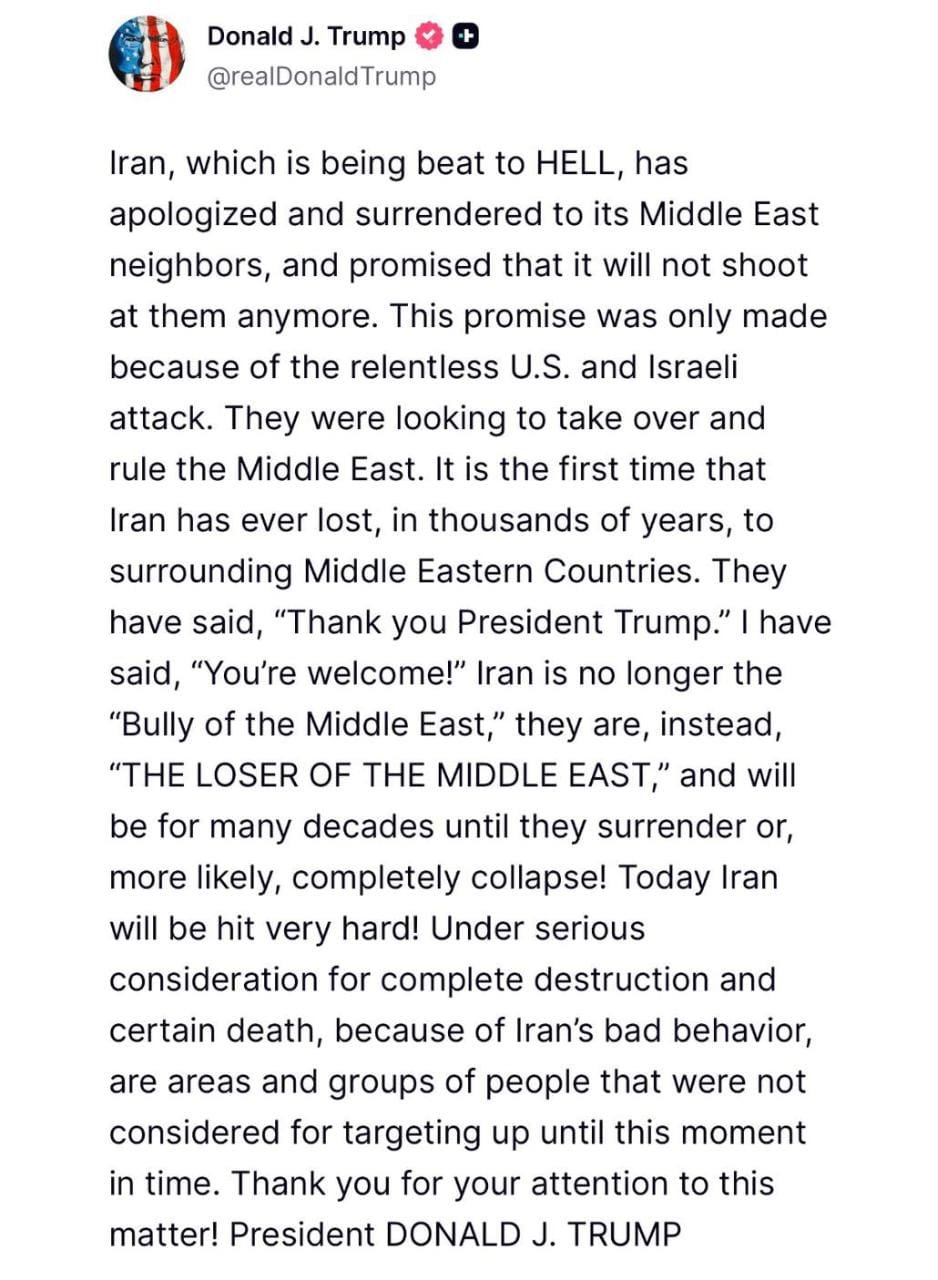
In an extraordinary public statement this week, Donald Trump — the sitting President of the United States — claimed that Iran had “surrendered” after issuing an apology to its Middle Eastern neighbours for recent attacks. According to Trump, this apology was proof that Iran was “being beat to HELL” by relentless U.S. and Israeli military pressure. He went further, calling Iran the new “LOSER of the Middle East” and warning that the country would be “hit very hard,” with additional targets now under consideration.
But a closer look at the facts reveals a very different picture — one that undermines the president’s triumphalist tone and exposes the statement as political posturing rather than accurate geopolitical analysis.
Apology to Neighbours ≠ Surrender to the U.S. or Israel
Iran’s president and interim leadership acknowledged the suffering their missile and drone strikes inflicted on neighbouring Gulf states and publicly expressed regret. They announced that they would halt attacks on regional neighbours unless those countries attacked Iran first. This was framed as an attempt to prevent wider escalation, not capitulation.
However, missiles continue to be launched across the region — including at U.S. and allied interests — and the conflict shows no signs of ending. Using an internal diplomatic gesture to neighbouring states as a basis for claiming full surrender is misleading at best. It inflates a regional de‑escalation effort into a narrative of total defeat.
Unconditional Surrender as Policy? A Recipe for Endless War
Trump’s rhetoric has also included demands for Iran’s unconditional surrender — phrasing more familiar from Hollywood blockbusters than from real diplomacy. In fact, the United States has publicly stated it would only consider negotiations if Tehran capitulates completely, a stance that actively rejects compromise.
Unconditional surrender demands have rarely ended wars quickly, and when they do, they can leave long, bitter legacies. History shows that forcing total capitulation tends to prolong conflict, entrench resistance, and undermine prospects for peace.
Meanwhile, an intelligence assessment released this week warned that even a large‑scale military assault is unlikely to topple Iran’s deeply entrenched leadership structures — even after the death of Supreme Leader Ayatollah Ali Khamenei earlier in the conflict.
Domestic and Global Consequences
The conflict has already exacted a heavy toll. Thousands of civilians have died in Iran, Lebanon, and other parts of the region, infrastructure has been struck, global oil markets are disrupted, and humanitarian crises are emerging.Calling a gesture toward regional stability a “surrender” while refusing diplomatic avenues and continuing to escalate militarily contributes to widening instability rather than resolving it.
Engage with Our Experts
Join 360 Muslim Experts to stay updated with the latest in research, education, and professional development.
Get in Touch